 Image 1 of 1
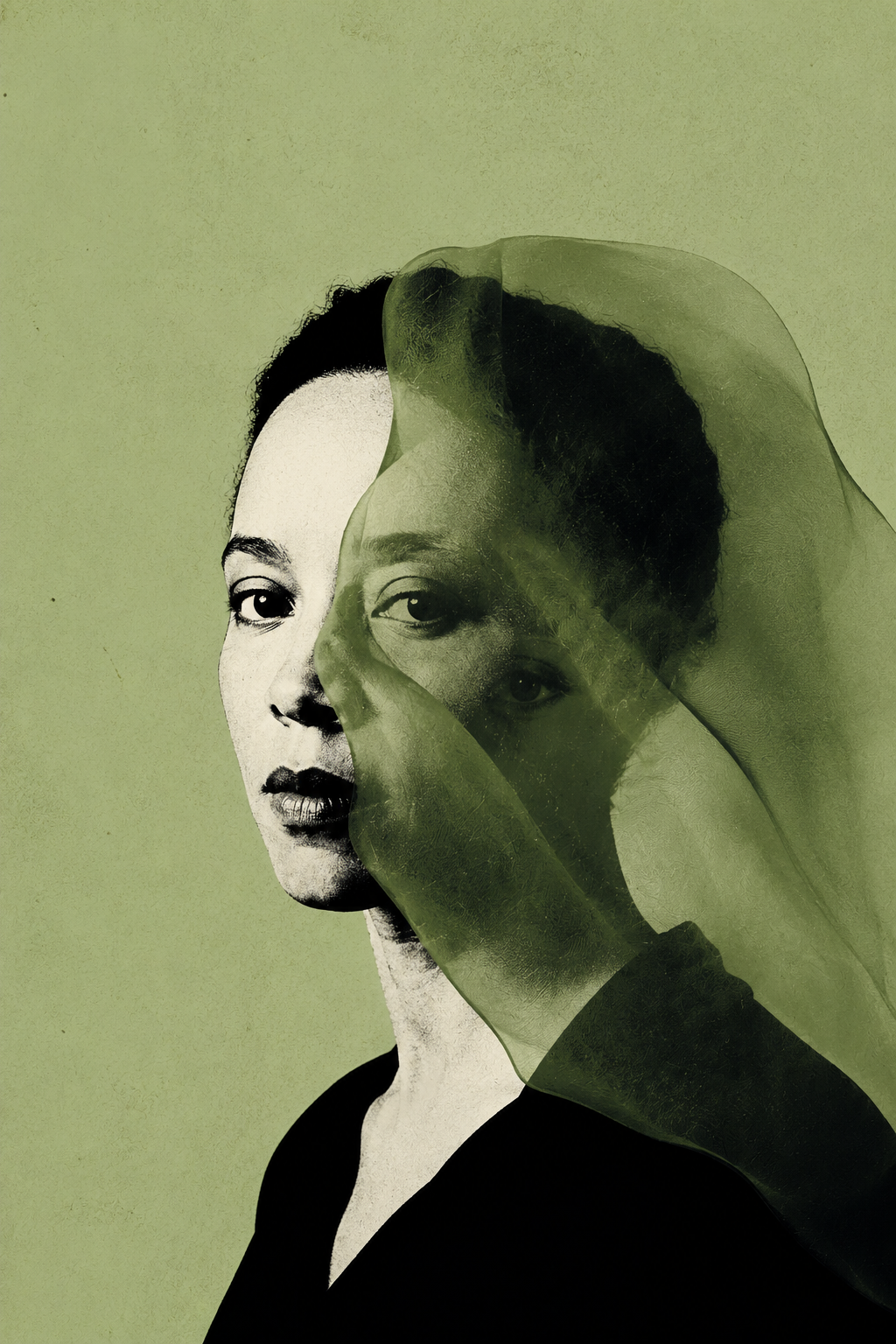
Marie NDiaye stands as one of the most commanding and enigmatic voices in contemporary French letters. A writer who published her first novel with the prestigious Éditions de Minuit at the age of seventeen, she has since built a body of work that is as architecturally precise as it is haunting. In 2001, she was awarded the Prix Femina for Rosie Carpe, and in 2009, she made history as the first Black woman to win the Prix Goncourt for Trois femmes puissantes. Yet, among her many acclaimed works, Autoportrait en vert (2005) remains perhaps her most singular achievement—a slim, hypnotic short volume that gracefully eludes every category it touches. Part memoir, part dream-journal, and part ghost story, the text is further unsettled by the inclusion of eerie, spectral photographs that seem to offer evidence for a reality that remains just out of reach.
The narrative is anchored in the winter of 2003, as the Garonne River begins to rise in the dark, threatening the village where the narrator lives. As the community waits in a state of quiet, collective suspense, this swelling water seems to release the “women in green”—mercurial figures who begin to haunt the edges of the narrator’s daily life. Whether it is a strange neighbor standing beneath a banana tree, a childhood friend who appears fundamentally altered, or the narrator’s own mother, these figures are not quite characters in a traditional sense. Instead, they appear as fragments of a possible self, as manifestations of repressed memory or impending fear. The text moves not in a straight line, but in echoes and spirals, mimicking the fluid, rising tide of the river itself.
NDiaye’s prose is celebrated for its cool, almost ceremonious precision; it is a calm, polished surface under which a profound sense of the uncanny is allowed to take root. She excels at capturing “unhomely” feeling where the domestic and the familiar suddenly turn strange and unrecognizable without anyone ever raising their voice. In her hands, the ordinary world becomes a place of quiet, spectral instability. Autoportrait en vert offers no easy resolutions or fixed meanings; instead, it invites the reader into a state of heightened awareness. It remains one of the most original and unsettling meditations on identity in contemporary literature, asking us how much of ourselves is reflected in the strangers we encounter, and how much of our own history remains submerged, waiting for the waters to rise.