 Image 1 of 1
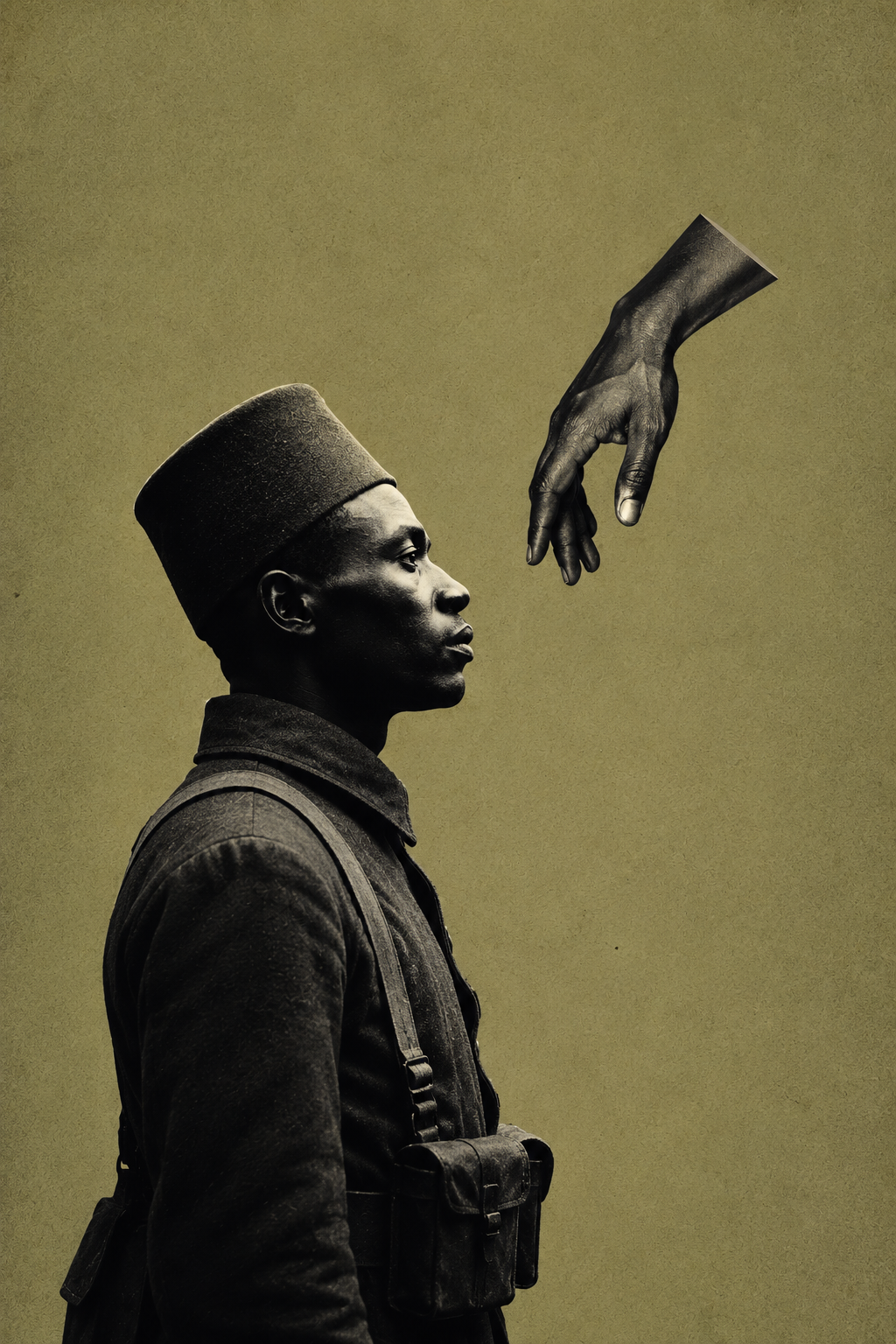
David Diop (born 1966 in Paris, raised in Senegal) is a professor of literature whose second novel, Frère d'âme, achieved a rare feat: it won the Prix Goncourt des Lycéens in 2018 and the International Booker Prize in 2021, becoming a global phenomenon. The novel brought into the mainstream of French letters a long-overlooked history: the tirailleurs sénégalais, the West African soldiers conscripted by France into the brutal trenches of the First World War.
The story is told through the voice of Alfa Ndiaye, a young soldier who has just witnessed the agonizing death of his childhood friend, Mademba Diop, in no man’s land. Three times, Mademba begged Alfa to end his suffering; three times, Alfa refused, bound by a traditional morality that the war has already rendered hollow. Consumed by a guilt that unhinges his mind, Alfa begins to “play the part” the French army expects of him—a savage warrior—but with a terrifying, private intensity. He begins crossing enemy lines alone at night, returning with gruesome trophies that first earn him decorations, then fear, and finally exile to the rear.
Diop’s prose possesses an extraordinary, wave-like rhythm. The narrative unfolds as a long, incantatory monologue—braiding together the mud of the trenches with memories of a village in Senegal and the disappearance of his mother. Drawing its structure from the oral traditions of the Wolof language rather than classical French syntax, the text uses repetition as a ritual, teaching the reader its specific language as the story descends into madness. Be advised: the violence is graphic and the psychological journey is intense. Yet, the novel remains an essential meditation on the meaning of friendship and the question of what happens to a soul when it is used as a weapon of empire. Brief, hypnotic, and devastating, it is a book that is impossible to forget.