 Image 1 of 1
LAURENT BINET (born 1972) spent a decade teaching literature before turning to fiction, and there is something classroom-like about his books: he likes to explain, to digress, to argue, and to play with his reader. Since his first novel, HHhH (2010), each of his books has taken a different form while returning to the same preoccupations: how a story is told and who gets to tell it. Perspective(s) is his fourth novel. Published in 2023, it was one of the standout titles of that year's rentrée littéraire and won the Prix du Roman historique. The English translation appeared in 2025 to wide acclaim—praised in The New Yorker and The Guardian, and named one of The Washington Post's 50 Best Novels of the Year.
Florence, New Year's Day, 1557. The painter Jacopo Pontormo is found dead at the foot of the frescoes he had been working on for years in the church of San Lorenzo, and in his ransacked studio, the investigators uncover a scandal within the scandal: an obscene canvas that shows the duke's own daughter. Duke Cosimo de' Medici, desperate to contain the damage, entrusts the inquiry to Giorgio Vasari—painter, architect, and author of Lives of the Artists—who turns for help to the aging, irascible Michelangelo, in exile in Rome. Discretion is everything: the case touches the honor of the Medici at the very moment when Catherine, queen of France, and her ally Piero Strozzi are watching Florence for any sign of weakness, and one wrong letter could tip a fragile city toward war.
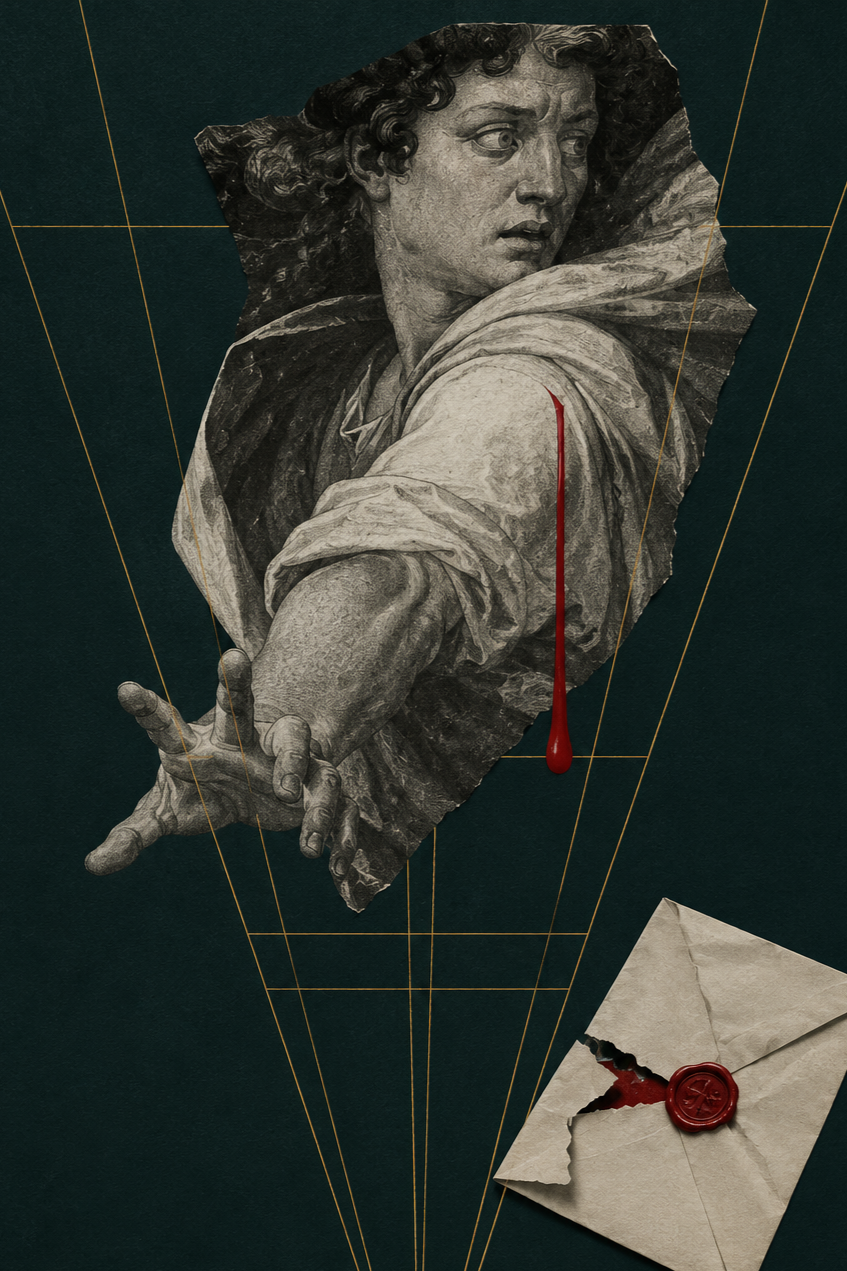
The novel is an epistolary thriller, a form Binet playfully reinvents: the story unfolds entirely through letters exchanged among painters, duchesses, spies, and sovereigns, with no narrator to arbitrate among them. Each correspondent has something to gain and something to hide, and the reader assembles the case from testimonies that cannot all be true. The title names both the method and the subject: perspective, the Renaissance invention that gave painting its depth, also organizes the book, with every account written from a position that determines what can be seen. The epistolary form suits our weekly rhythm well: the letters are short, and the French is clear and modern despite the sixteenth-century setting. The book opens onto a wide range of themes, but no knowledge of Italian art history is required; a taste for intrigue and for arguing about evidence will serve you better.