 Image 1 of 1
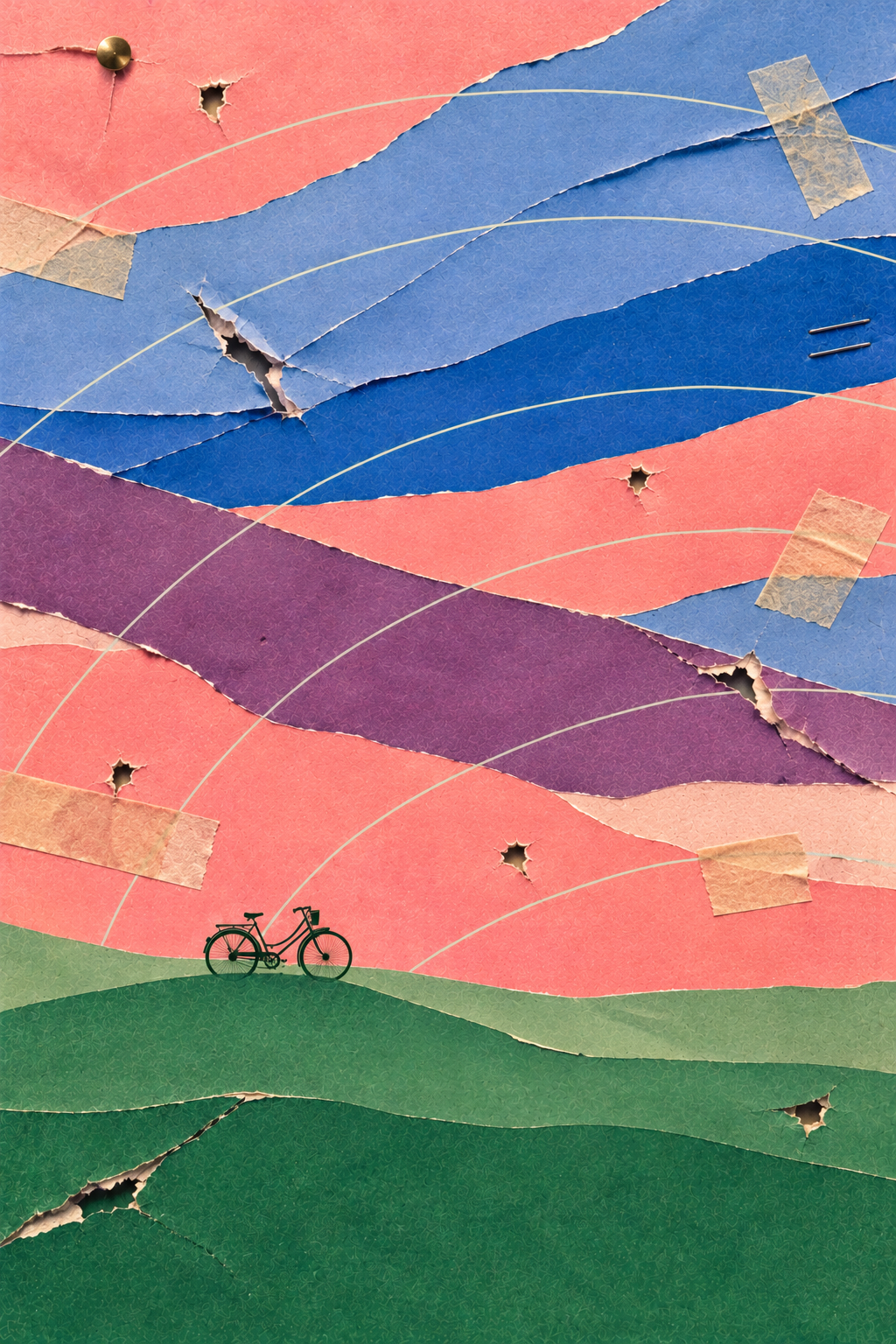
“C’était sans doute un plaisant paysage, quoique momentanément troublé par cette irruption venteuse, bruyante, vraiment inhabituelle pour la saison et qui, contraignant Anthime à maintenir sa visière, occupait tout l’espace sonore. On n’entendait rien d’autre que cet air en mouvement, il était quatre heures de l’après-midi.”
Jean Echenoz (born 1947) is known for the spareness of his prose that can be disconcertingly easy to read yet almost always reward a second, closer look. Beneath their laconic surface, he crafts a prose that is at once precise and playful, seeking a balance between form and content through abrupt understatements, unexpected disjunctions, and striking juxtapositions. Drawing on genres such as detective fiction and the adventure novel, he has built a body of work that functions at once as an ironic parody and an affectionate tribute, preserving the pleasures of storytelling even as they gently undermine its conventions. Awarded both the Prix Médicis and the Prix Goncourt, his novels have been widely translated and sometimes described as quintessentially French, marked by a distinctive blend of nonchalance, intellectual sophistication, and comic disillusionment. Published in 2012, 14 exemplifies many of the qualities that define his work.
Echenoz’s fictional world retains an air of obliqueness, shifting attention away from what appears central toward what is marginal, unsuccessful, belated, or seemingly insignificant. The narrator contributes to the playful destabilization of the narrative, undermining the reader’s expectations, with repeated, deadpan, sometimes sarcastic, intrusions that make everything needlessly complicated—but also stranger, funnier, and more refined. His characters are always exposed to the violence and contingencies of the world, which set them adrift. They give the impression of being little more than passengers in their own lives, watching helplessly as events derail or veer onto unexpected paths. Faced with these fragile lives, Echenoz's darkly comic humor emerges as a kind of redemption.
The title immediately evokes the sufferings of the First World War, yet it also suggests a promise that will not quite be fulfilled. With its title written in Arabic numerals and barely exceeding a hundred pages, the novel already signals that readers are unlikely to encounter the kind of sweeping epic traditionally associated with war literature. We are, in a sense, already entering the realm of parody, for 14 echoes Victor Hugo's vast historical fresco Ninety-Three (Quatre-vingt-treize, 1874), whose title transforms a date forever associated with the Reign of Terror into something almost monumental. By contrast, 14 carries less grandeur, but also less grandiloquence. The horizon of the historical novel that first seemed to take shape is already beginning to shift. Through this simple change of scale and perspective, Echenoz signals a radical refusal of the mythologization of violence.
Accordingly, 14 follows four characters whose story traces the inexorable yet strangely tranquil progression of events that will lead them to horror and slaughter. They move from the summer dawn of the war, from a declaration of war barely noticed, through the optimistic fanfare of mobilization, and finally into the long, exhausting march toward a military machine poised to grind them down. The stylistic restraint that accompanies this funereal progression becomes all the more striking when it lingers, in an almost Beckettian manner, on the mud-soaked horror and rat-haunted tedium of trench warfare. Echenoz offers a novel that defuses the spectacular and interweaves a series of seemingly insignificant lives whose intersections produce unexpected effects. If he rejects the false heroics traditionally associated with the conflict and returns the millions of fallen soldiers to the anonymity from which they came, it is ultimately to expose, gently but relentlessly, the arbitrariness of events and the tragic absurdity of human behavior when confronted with the impossible.
Such is the power of Echenoz's writing: discreetly sophisticated, sometimes dissonant, and occasionally far funnier than it has any right to be, it sustains a precarious balance between the certainty that literature cannot repair what has been broken and the modest yet necessary gesture of extending that possibility nonetheless, in the form of an elegy.