 Image 1 of 1
Marcel Proust (1871–1922) remains the preeminent architect of the human soul, a novelist whose monumental seven-volume achievement, À la recherche du temps perdu, stands as one of the supreme summits of world literature. Published between 1913 and 1927, this cycle did not merely transform narrative form; it redefined our understanding of consciousness and expanded the very possibility of what fiction can do. Beneath the formal elaboration of his prose lies one of the most urgent questions a writer has ever posed: how do we recover what is lost? How does the raw matter of lived experience—our fleeting sensations and forgotten moments—eventually become meaning?
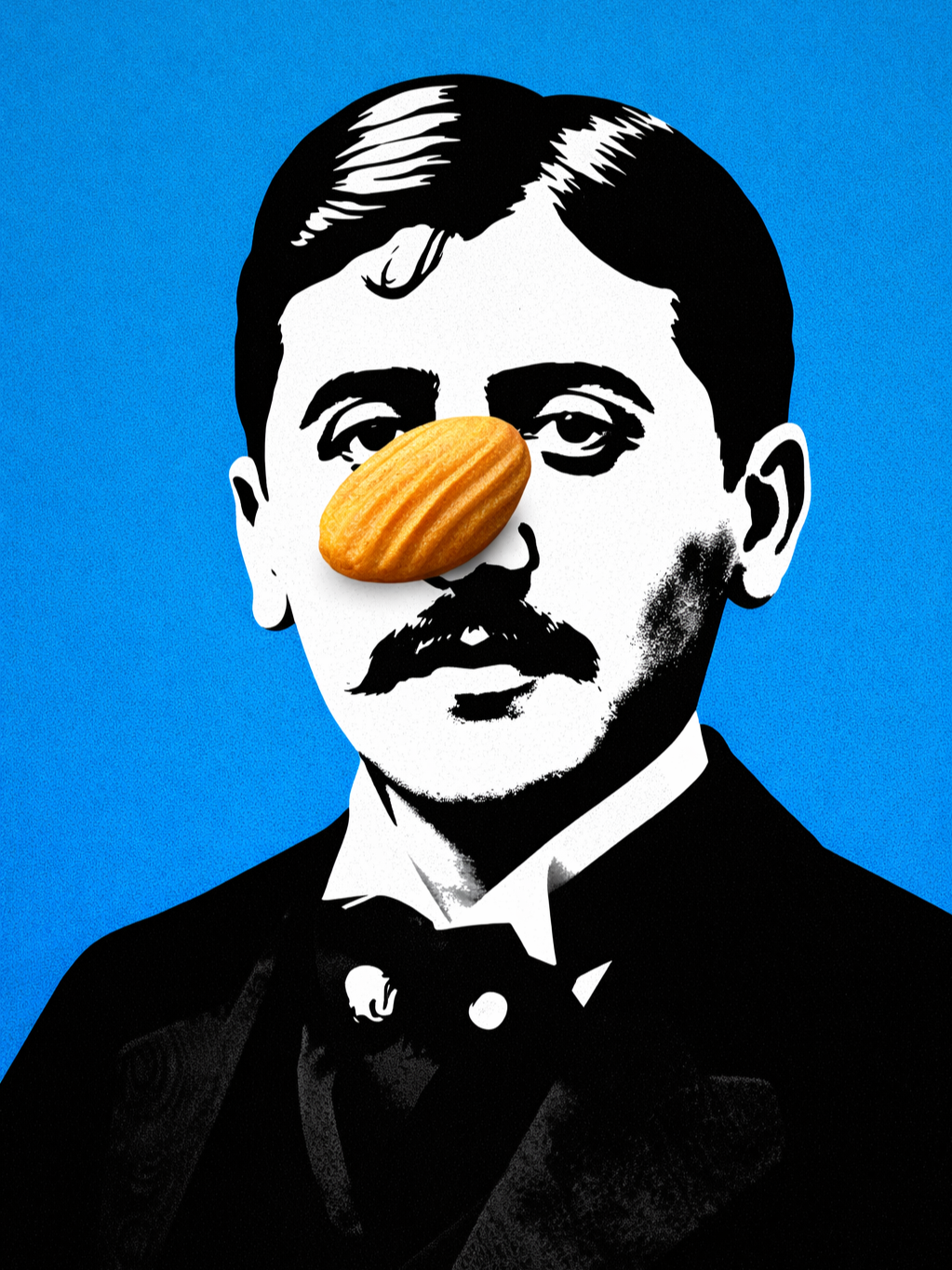
The journey begins with Du côté de chez Swann and a sentence that serves as a threshold for all of modern literature: “Longtemps, je me suis couché de bonne heure.” From this state of half-sleep, Proust leads us back to Combray, the world of the narrator’s childhood, where a simple madeleine dipped in a cup of tea releases a universe thought to be lost forever. This experience of involuntary memory acts as a resurrection, providing the emotional and philosophical engine that drives the entire Recherche.
It is here that everything starts: the anxious rituals around the mother’s bedtime kiss, the opposing sensibilities of Swann’s way and the Guermantes’ way, and the figure of Gilberte, glimpsed through a hawthorn hedge. Yet, for all its depth, Proust’s work is also remarkably accessible and often profoundly funny. He paints a masterful portrait of a highly sensitive child navigating a world of eccentric adults and social pretension, observed with a warmth and irony that frequently provoke laughter. His reputation for difficulty is, in many ways, a myth that dissolves as soon as one enters the rhythm of his prose.
This fall, we invite you to join us as we restart the full Recherche from the very beginning. Since 2019, the French Book Club has already completed the entire seven-volume cycle twice, and we are now embarking on our third journey through this masterpiece. Our reading remains deliberately slow—at a pace of only 23 pages a week—ensuring that Proust rewards our collective patience rather than taxing our speed. No prior mastery is expected, only a desire for exploration. Whether you are coming to Proust for the first time or returning after years away, there is no better way to discover this work than slowly, together, and out loud, letting the music of the text reveal its secrets over time.