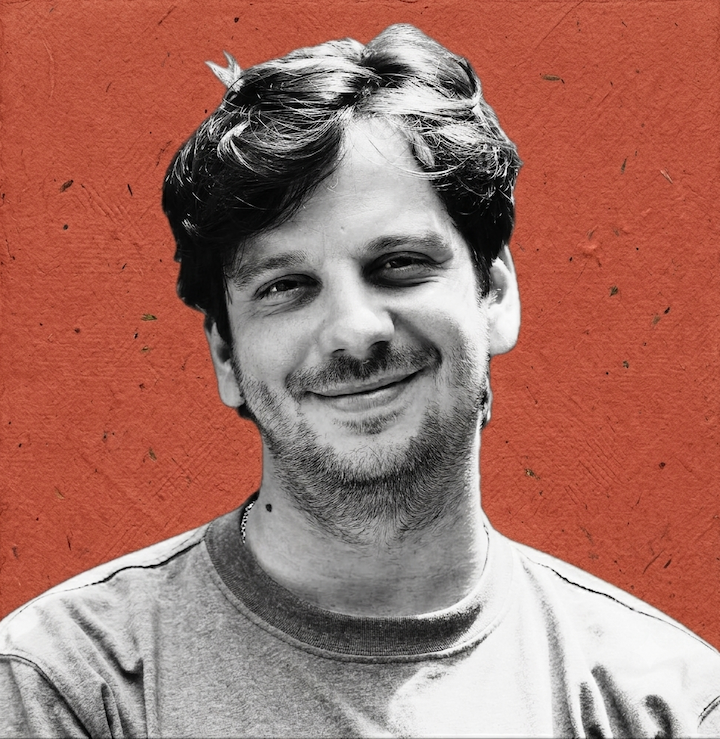
Lucie Rico, GPS
Our Reading Journey
Ariane hasn't left her apartment much since she was laid off from her job as a crime reporter. Unemployment has turned into a kind of retreat: she waves off her mother's calls and lets Antoine, her boyfriend, come to her rather than the other way around. So when her oldest friend Sandrine asks her to stand as a witness at her engagement party at a château Ariane has never seen, the invitation lands as both a relief and a threat. To help her find the way, Sandrine sends a location-sharing link, a red dot, perfectly round, glowing on a map. Ariane clicks, and the party turns out exactly as badly as she'd feared, an evening of team-building small talk she has no language for. A few days later, Sandrine's fiancé shows up at her door: Sandrine never came home. The red dot, though, is still there, and it's still moving. Ariane starts to watch it.
GPS is narrated in the second person, so watching the dot becomes something the reader does too, not just Ariane. Lucie Rico builds the novel around one substitution: the red point on the screen stops standing for where Sandrine is and starts standing in for Sandrine herself, a friend Ariane can zoom into, trail street by street, and never have to face. Out of work and mostly out of company, she has already stopped keeping to the world's usual coordinates; the map offers her a version of the real that behaves, that updates on schedule, and that doesn't ask anything of her the way Antoine or her mother do. The novel keeps circling back to the fait divers, the lurid one-paragraph crime items Ariane used to write for a living, and treats Sandrine's disappearance the same way: a story assembled from fragments, appetite, and the reader's own willingness to keep scrolling.
About the Author
Lucie Rico was born in 1988 in Perpignan. She trained in cinema and applied literature and spent the years before publishing her first novel working in publishing and new media while directing short films and documentaries. Her debut, Le Chant du poulet sous vide (P.O.L., 2020), follows a woman returning to her late mother's chicken farm and won the Prix du Roman d'Écologie and the Prix du Cheval Blanc in 2021. GPS (P.O.L., 2022) followed two years later, earning a special mention for the Prix Wepler-Fondation La Poste and a place on the ten-title shortlist for the Prix du Livre Inter in 2023. Rico now teaches literary creation at the Université Clermont Auvergne and splits her time between Clermont-Ferrand, Aubervilliers, and Perpignan.