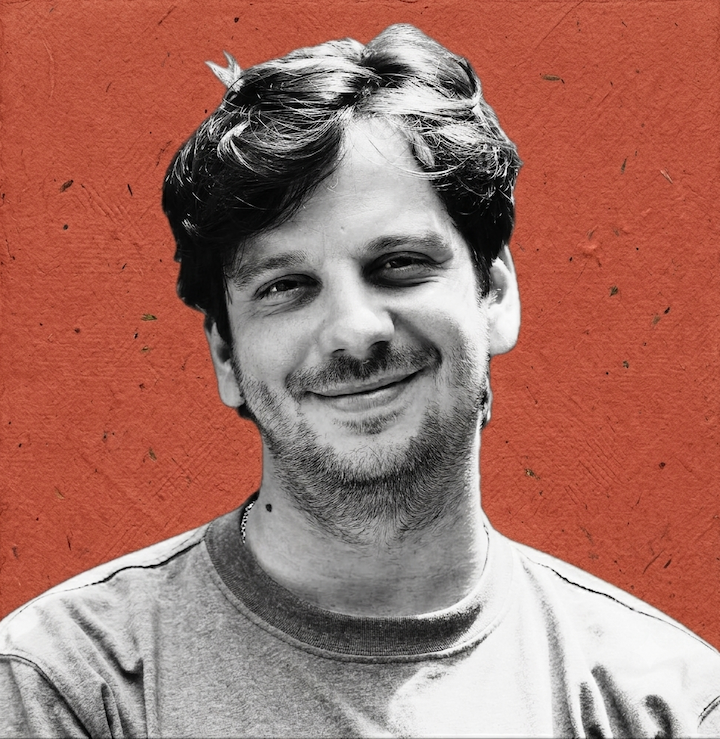
Emmanuel Carrère, L’Adversaire
Our Reading Journey
In January 1993, Jean-Claude Romand killed his wife, his children, and his parents before attempting, and failing, to take his life. The investigation revealed a staggering truth: for eighteen years, Romand had lived a total lie, pretending to be a world-class doctor at the World Health Organization while spending his days wandering Jura forests and highway rest areas.
Our discussion of L’Adversaire (2000) followed Carrère's journey as he navigated the wreckage of this metaphysical study of absence. We grappled with the chilling reality of those "empty hours" that define the narrative—the thousands of days Romand spent sitting in his car, staring at nothing, simply to maintain the gaze of others.
The intellectual highlight of our session was Carrère’s radical subversion of the true-crime genre through autofiction. We analyzed how the author places himself within the story, documenting his obsession and eventual correspondence with the killer. This led to a profound debate on the ethical boundaries of empathy: can one document such extreme human horror without being contaminated by the lie? We focused on the adversary as a spiritual force—the demonic void that replaces the self when a life is built entirely on an imposture. Our session left us with a haunting ontological question: what remains of the "self" when the mask is no longer something you wear but the only thing that exists?
About the Author
Emmanuel Carrère (b. 1957) is a master of contemporary French letters and a master of non-fiction literature. With L'Adversaire, he abandoned traditional fiction to pioneer a style that blends investigative journalism with deeply personal, philosophical inquiry. Often compared to Truman Capote, Carrère is celebrated for his ability to explore the darkest corners of the human psyche—from the madness of Limonov to the spiritual crisis of Le Royaume—always placing his doubts and presence at the center of the narrative.