Laurent Mauvignier, Continuer
Our Reading Journey
Our session opened with two riders and a string of horses crossing the Tian-Shan range of Kyrgyzstan: Sibylle, a nurse in her forties, and her teenage son Samuel, whom she has pulled out of France and away from a spiral of petty delinquency. Mauvignier drops the reader into the journey already underway, then loops back to explain how mother and son got there. Samuel resents her for it, and everyone around them—teachers, neighbors, and his father—has long treated him as the cause of the family's troubles rather than its casualty. On the steppe, stripped of the vocabulary that named him a problem back home, he rides two horses in particular, Starman and Sidious, who become the only relationships in the book he doesn't have to defend himself against. French itself works the same way between mother and son abroad: the one language they still share and the one wall still standing between them.
The second half of our discussion turned to what the trip is actually curing. Sibylle's rescue mission reads at first as pure devotion, but the journey is perhaps mostly about her own need to escape a life she no longer recognizes. Her ex-husband, Benoît, manipulates events from a distance, and Sibylle exerts a psychological grip on Samuel of her own, without ever meaning to; the novel refuses any easy division between victim and rescuer. We traced the story's climax carefully rather than fully: a single night when Sibylle briefly forgets her son and the ground under the whole arrangement gives way, without spelling out how far that goes. Mauvignier never resolves the question he poses through his two riders, the one that sent him to Kyrgyzstan in the first place: whether continuing is still possible once everything tells you to stop or is only necessary.
About the Author
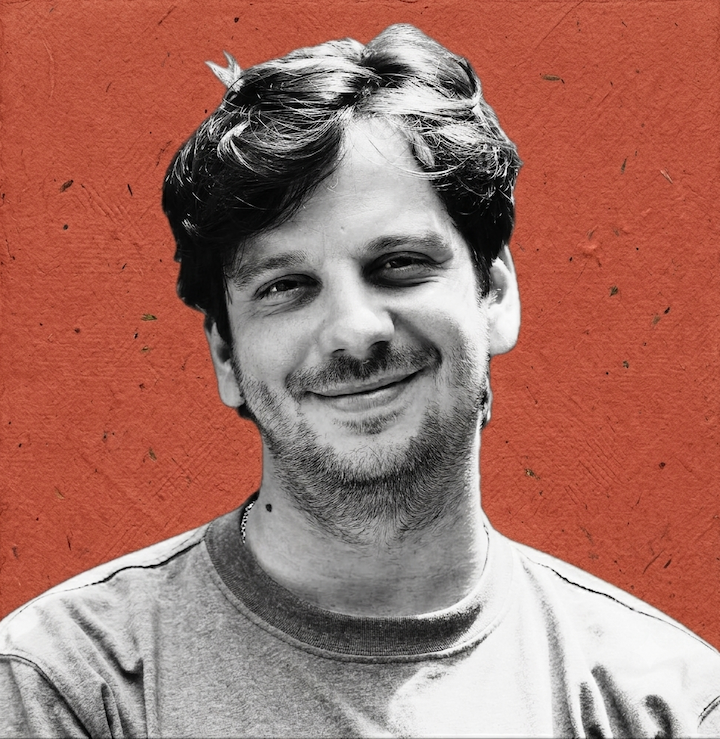
Laurent Mauvignier was born in 1967 in Tours and trained at the École nationale supérieure des beaux-arts there before turning to writing. Every one of his books has appeared with Éditions de Minuit, starting with Loin d'eux in 1999, and his fiction returns often to ordinary violence and to wounds people carry without naming them. Des hommes (2009), which follows French veterans of the Algerian War four decades on, won the Prix des libraires and the Prix Girondin. Histoires de la nuit (2020) was a finalist for the Prix Goncourt, and in 2025 he won the prize outright for La Maison vide. Continuer, published in 2016, stands apart in his catalogue: shorter, more linear, and closer to a page-turner than the dense, looping novels he is known for.