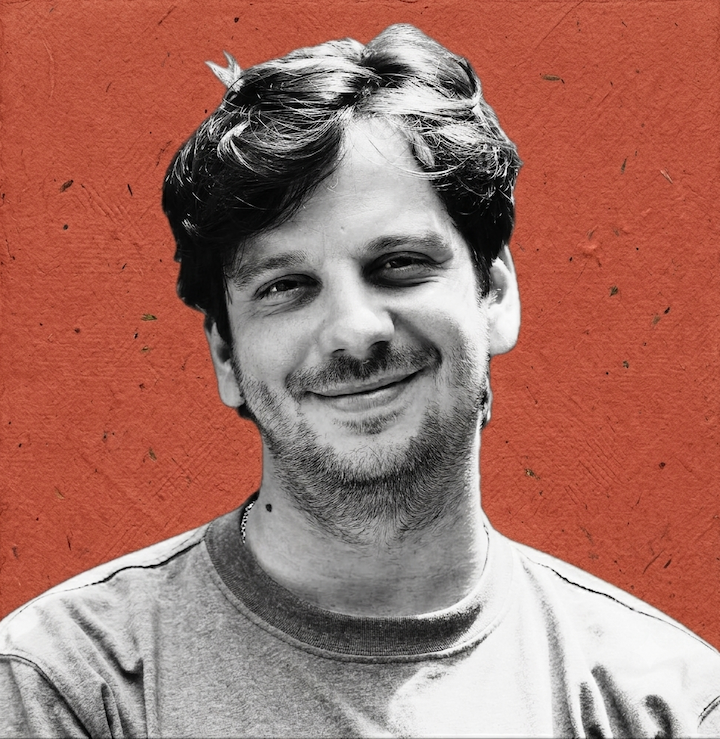
David Diop, Frère d’âme
Our Reading Journey
Our session centered on the impossible position Diop puts his narrator in from the first page. Alfa Ndiaye's closest friend since childhood, Mademba Diop, lies dying in no-man's-land and asks three times to be finished off. Alfa cannot bring himself to do it, held back by a form of love that will not let him name what mercy would actually require. Alfa carries that refusal as the deepest wound in a book already full of them. We kept returning to how much tenderness sits underneath this novel's violence. Alfa's grief for Mademba, and the childhood he keeps circling back to, his mother, and the wrestling matches at home in Gandiol give him an interior life no colonial stereotype could contain. He is never just a type. He is a man destroyed by having loved someone too specifically to survive losing him.
That interior life is precisely what makes the novel's double bind so brutal. The French command had spent months telling its Senegalese troops that the enemy feared them as savages and rewarded them for playing the part. Once Alfa's grief pushes that performance further than command ever intended, the same officers who applauded him start calling his behavior madness. We talked at length about how deliberately colonial this madness is: manufactured by the war, diagnosed by a wartime psychiatry that had no real vocabulary for what a colonized soldier was going through, then used as grounds to remove him quietly from view. The system that made Alfa necessary discards him the moment his grief stops being useful. By the last chapters, his voice and Mademba's begin to blur into one, less a further collapse than the shape grief finally takes when there is nowhere else for it to go.
About the Author
David Diop was born in Paris on 24 February 1966, to a Senegalese father and a French mother, and spent most of his childhood and adolescence in Senegal, where he was schooled at the Pères Maristes in Dakar before returning to France for university. He holds the agrégation and completed a 1996 doctoral thesis at the Sorbonne on the intellectual origins of political philosophy in Diderot and d'Alembert's Encyclopédie. Since 1998 he has taught eighteenth-century literature at the Université de Pau et des Pays de l'Adour, specializing in European travel writing about Africa during the Enlightenment era. His first novel, 1889, L'Attraction universelle, appeared in 2012. Frère d'âme won the Prix Goncourt des lycéens in France and made Diop, in 2021, the first French writer to win the International Booker Prize; it has since been translated into more than forty languages. He has continued to publish since, among them La Porte du voyage sans retour in 2021 and Où s'adosse le ciel in 2025. Diop has said the novel grew partly out of his great-grandfather's silence, a Great War veteran who never spoke of what he saw.