Andreï Makine, Le Testament français
Our Reading Journey
Our session followed a Siberian childhood built almost entirely out of a language that didn't belong there. The narrator's French grandmother, Charlotte Lemonnier, stranded on the Soviet steppe by history, feeds him fragments of a Belle Époque France he has never seen: the Seine rising over its banks, bartavelles and ortolans on a state menu, newspaper clippings gone yellow, the sound of the words alone conjuring a country critics have compared to a rediscovered Atlantis. We discussed inheriting a homeland secondhand through stories and a language learned at four, and how one can imagine an entire nation before ever visiting it. By the time the narrator becomes a writer himself, choosing to work in French rather than Russian, the novel has turned its existence into an argument: a person can remake themselves inside a language and a history that were never, strictly, theirs to claim.
We also discussed how much those stories protect Charlotte and the narrator and what they protect them from. The vocabulary of the novel keeps returning to pudeur, modesty, restraint, and a reluctance to say things outright, a reluctance that runs through everything the grandmother chooses to tell and everything she leaves out. Her France is curated: the floods and the state dinners, not the losses that presumably came with living through a revolution and two wars on the wrong side of a border. We asked whether that curation is a kind of lie or a kind of mercy, a screen the family holds up so the past stays bearable, and whether Makine, writing his childhood back into fiction, is doing exactly the same thing to us. The novel never resolves that question. It just makes sure we notice we're asking it.
About the Author
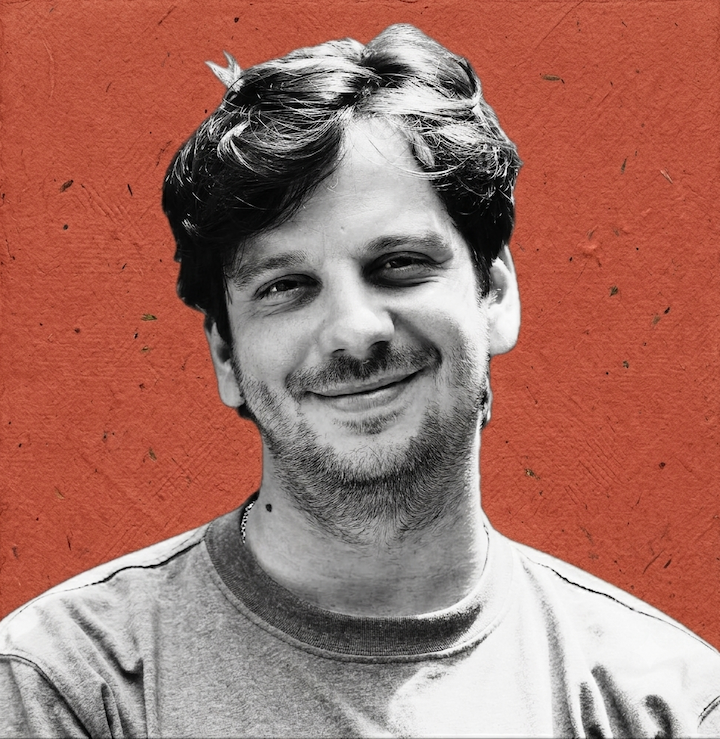
Andreï Makine was born in Krasnoyarsk, Siberia, on 10 September 1957, and became bilingual by four thanks to a French grandmother who later became the model for Charlotte Lemonnier. He studied at the University of Kalinin, wrote a doctoral thesis on contemporary French literature in Moscow, and taught philology at the Novgorod Pedagogical Institute before a 1987 trip to France, at age thirty, ended in a request for political asylum. The years that followed were precarious enough that he later called them a permanent state of despair, and he got by teaching Russian at Sciences Po and the École normale supérieure. Publishers doubted a Russian émigré could write French this well, so his early novels were submitted and sold as translations, even though they were all written directly in French. Le Testament français, his fourth novel, appeared from Mercure de France in 1995 and won the Prix Goncourt, the Prix Goncourt des lycéens, and the Prix Médicis in the same season, a sweep no other novel had managed. Makine received French citizenship in 1996, after being refused it several times before, and was elected to the Académie française in 2016, to the seat once held by Assia Djebar.